
Platinum CEUs
Available Courses
AIA and IDCEC accredited – 1 LU | HSW
Designing for Visual Acuity and Cognitive Clarity: Vertical Space Solutions for Learning Environments
The evolution of learning environments and the principles of human-centered design are converging as we recognize the profound impact of space on cognitive function, safety, and engagement. Educational spaces are no longer static backdrops for instruction but dynamic environments that actively contribute to cognitive clarity, collaboration, and overall occupant welfare.
By integrating evidence-based design strategies, neuroeducation principles, and vertical learning systems, designers can create learning environments that support mental health, physical safety, and overall well-being. These systems encourage organization, accessibility, and sensory balance—key factors that reduce cognitive overload and enhance focus, comfort, and engagement.
Learning Objectives
- Understand how neuroeducation connects brain science and spatial design to improve learning outcomes and occupant well-being.
- Identify how vertical learning systems enhance cognitive clarity, visual organization, and accessibility in educational environments.
- Explore the role of sensory integration—including acoustic, tactile, and visual stimuli—in improving focus, comfort, and engagement.
- Apply evidence-based design principles to create organized, clutter-free learning environments that promote health, safety, and welfare.
AIA and IDCEC accredited – 1 LU | HSW
Vertical Organization Strategies for CTE, Maker, and STEAM Spaces
Career and Technical Education (CTE), Maker, and STEAM environments increasingly support project-based, tool-intensive learning, placing heightened demands on safety, supervision, and space efficiency. This course examines current trends and emerging space types shaping these environments, including robotics, fabrication, and interdisciplinary maker spaces.
Drawing from research in environmental psychology, ergonomics, and visual organization, the course explores how vertical storage strategies reduce clutter-related hazards, improve visibility and supervision, and support independent, responsible tool use. Participants will learn scalable, tiered approaches to organizing tools, materials, and equipment that enhance health, safety, and welfare while maintaining flexibility for evolving curricula.
Learning Objectives
Identify current trends and emerging space types influencing the design of CTE, Maker, and STEAM learning environments.
Explain how research in ergonomics, environmental psychology, and visual organization supports vertical storage strategies in learning spaces.
Differentiate organization and storage needs across common CTE space types, including robotics, fabrication, maker, and technology-rich labs.
Apply tiered, scalable vertical organization strategies to improve safety, supervision, and long-term flexibility in CTE and STEAM environments.
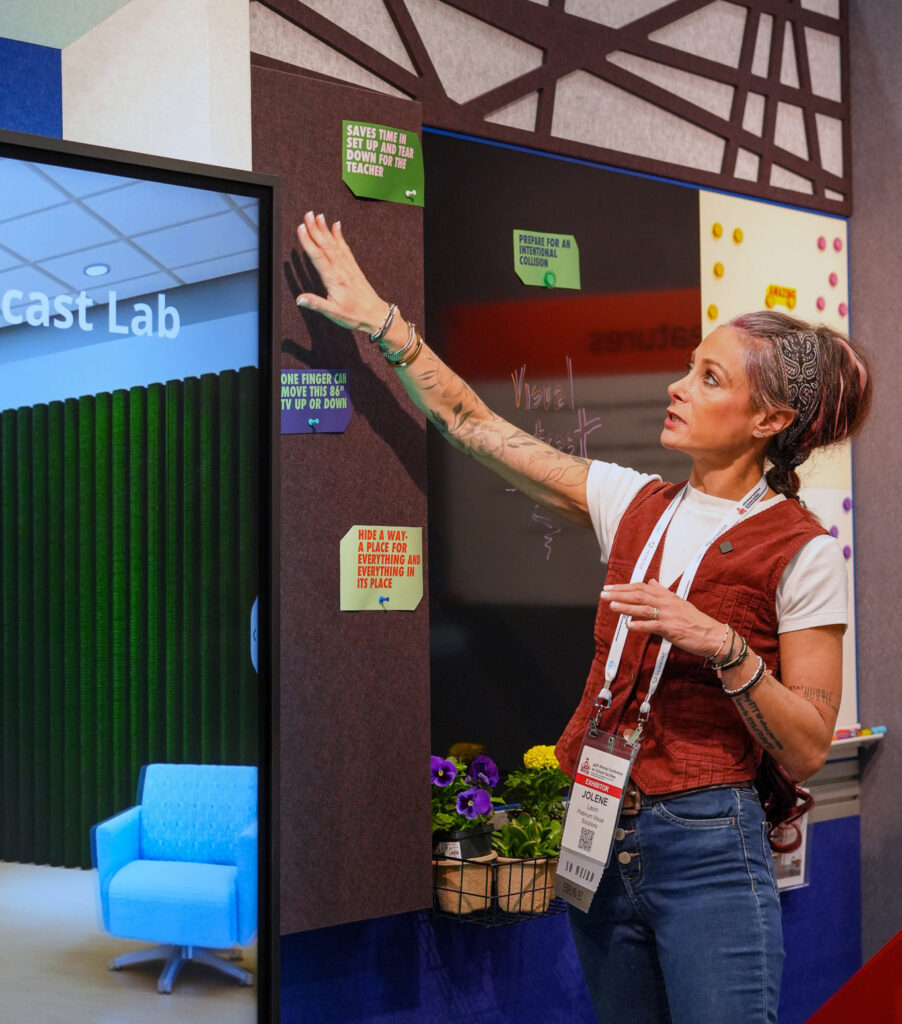
Course Instructor
Jolene Levin
Schedule Your CEU
Fill out the form below and we will contact you to get your CEU scheduled.